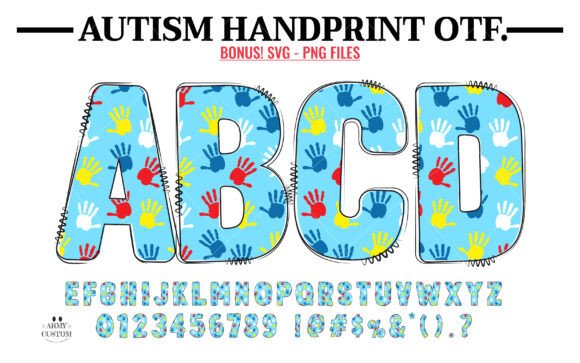
Autism Handprint: A Font That Speaks Volumes
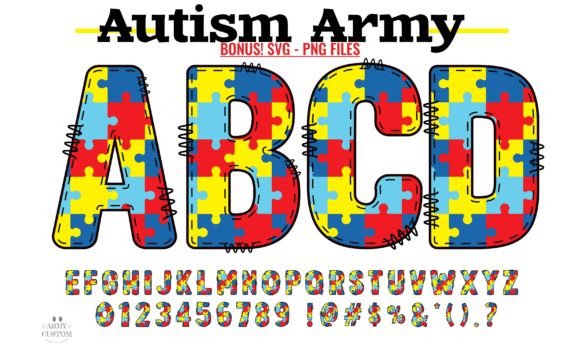
Finding a typeface that does more than just spell out words is a genuine challenge. Most fonts are functional, but some carry a message before you even read the text. Autism Handprint is one of those rare finds. It’s a vibrant display font where every letterform is filled with colorful handprints, creating a visual language of unity, awareness, and love. This isn't just another creative font; it's a design asset with a purpose, built for projects that aim to connect and communicate on a deeper level.
Visual Personality and Style
At its core, Autism Handprint is a bold, unapologetic display typeface. The letter shapes are solid and clear, providing a strong foundation for the intricate handprint patterns that fill them. Each character is a miniature mosaic of overlapping, colorful hands—a direct visual metaphor for community and collective support. The style is inherently playful and hopeful, yet the bold weight ensures it maintains presence and legibility at larger scales. It strikes a unique balance between being a decorative element and a functional typographic tool, making it a standout choice for any project where you want the font itself to be part of the story.
The appeal lies in its immediate emotional resonance. For anyone involved in autism advocacy, education, or community building, this font instantly signals inclusion and understanding. It’s a visual shorthand for the themes of Autism Awareness Month, but its application extends far beyond April. The handprint motif is universal, speaking to childhood, creativity, and the human touch—qualities that can add warmth and authenticity to a wide range of designs.
Where This Font Truly Shines
Understanding where Autism Handprint fits best is key to using it effectively. As a premium font designed for impact, it’s not suited for body text or fine print. Its strength is in headlines, logos, and focal points where its detailed artwork can be appreciated. Think of it as a centerpiece for your design rather than a supporting player.
In editorial design and packaging design, it can create a striking cover or label for products related to special education, children's books, or community initiatives. For brand identity projects, particularly for organizations, nonprofits, or small businesses focused on inclusivity, it can form the heart of a logo or a campaign headline, ensuring the brand’s values are communicated visually from the first glance. It’s equally powerful in social media graphics and web design hero sections, where a bold, meaningful header can stop the scroll and engage viewers emotionally.
For print projects, its applications are vast. Imagine event posters for awareness walks, educational posters for classrooms, or motivational wall art for therapy centers. The font brings an inherent positivity and energy. Entrepreneurs and crafters will find it perfect for designing t-shirts, tote bags, stickers, and merchandise that supports advocacy. The included bonus SVG and PNG files significantly expand its versatility, allowing you to incorporate the handprint patterns as standalone graphic elements in your layouts without being limited to the letterforms.
Making It Work: Practical Guidance for Designers
Choosing to use a highly thematic font like this requires a thoughtful approach. Your first consideration should be project fit. Does the subject matter align with the font's themes of awareness, community, and support? If the answer is yes, you’ve found a powerful tool. If you’re working on a formal corporate report, it’s likely not the right choice. But for a campaign, an event, or a brand that wears its heart on its sleeve, it’s ideal.
Font pairing is where you can demonstrate real design skill. Because Autism Handprint is so visually dense, it pairs best with simple, clean typefaces. A neutral sans serif font for body text or subheadings will provide a calm, readable counterpart that lets the display font do the talking. A simple serif font could also work for a slightly more traditional, yet still warm, feel. Avoid pairing it with other decorative, script, or handwritten fonts, as the design will quickly become chaotic and lose its professional edge.
Always consider readability in context. Test the font at the actual size it will be used. At very small sizes, the handprint detail can become muddy, so reserve it for larger applications. For logo design, ensure the wordmark is legible when scaled down to a favicon or a small social media avatar. Sometimes, using it for a single initial or a monogram can be a clever solution that maintains the essence without sacrificing clarity.
Finally, review the full package. The value of a commercial font like this includes its licensing, which typically allows for a wide range of uses from digital ads to printed merchandise. The bonus SVG and PNG files are not just add-ons; they are essential design assets that give you flexibility. You can use the handprint pattern as a background texture, cut out individual hand icons for accents, or layer them into your compositions for added depth. This transforms the font from a single tool into a mini design kit.
In the crowded space of modern typography, Autism Handprint