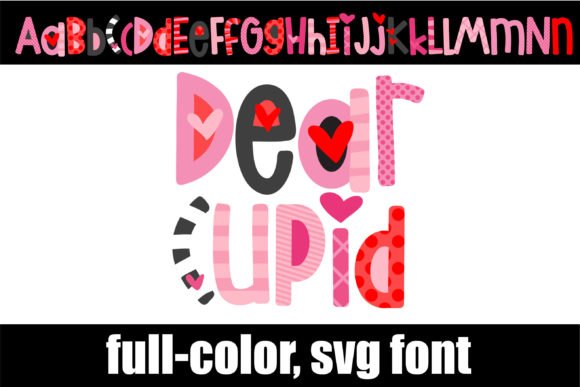
Dear Cupid: The Whimsical Color Font for Modern Design
When you first encounter Dear Cupid, you're not just looking at another typeface—you're meeting a personality. This premium font brings together youthful energy, playful sophistication, and a striking red-pink color palette that immediately draws the eye. As a color font built on OpenType-SVG technology, Dear Cupid renders its letterforms with built-in color gradients and multi-tonal effects, giving each character a rich, dimensional quality that traditional fonts simply cannot achieve.
Understanding the Visual Character of Dear Cupid
Dear Cupid sits at an interesting intersection in the typography world. It carries the spontaneity of a handwritten font while maintaining enough structure to function reliably across professional applications. The lettering style blends whimsical curves with mixed-case versatility, creating a typeface that feels approachable without sacrificing visual impact.
The red and pink color palette isn't accidental—it's a deliberate design choice that amplifies the font's emotional resonance. Warm tones naturally attract attention and evoke feelings of affection, energy, and warmth. This makes Dear Cupid particularly effective for projects where emotional connection matters as much as visual appeal.
What sets this creative font apart from standard script fonts is its layered complexity. Each glyph contains subtle variations in tone and texture that mimic hand-lettering techniques. The result is a typeface that looks authentically crafted rather than mechanically generated, which resonates strongly with audiences who appreciate artisanal quality in design.
Branding and Logo Design
For entrepreneurs and small business owners developing brand identity, Dear Cupid offers a distinctive voice. It works exceptionally well for businesses targeting audiences who value creativity, warmth, and personal connection—think boutique bakeries, handmade jewelry brands, children's clothing lines, wellness studios, or greeting card companies.
In logo design, this typeface serves as an immediate differentiator. While competitors rely on overused sans serif fonts or predictable serif fonts, Dear Cupid communicates originality at first glance. However, consider your industry carefully. A law firm probably won't benefit from its playful aesthetic, but a wedding planning service or a creative agency absolutely might.
Editorial and Publishing Design
Editorial designers working on magazine layouts, book covers, or newsletter headers will find Dear Cupid valuable for creating visual hierarchy. Its display font characteristics make it ideal for headlines, pull quotes, and feature titles where you need to establish mood quickly. The built-in color eliminates extra production steps—you won't need to manually apply gradients or layer effects to achieve that polished, dimensional look.
For publishing projects targeting lifestyle, fashion, beauty, or food audiences, this typeface naturally complements the subject matter. The warmth of the red-pink palette pairs beautifully with photography featuring natural light, food styling, or portrait work.
Digital Applications and Social Media
Social media graphics represent one of Dear Cupid's strongest applications. Platforms like Instagram, Pinterest, and TikTok reward visual boldness, and this font delivers exactly that. The color font format means your text stands out in crowded feeds without requiring elaborate background treatments or additional design assets.
Content creators and bloggers can use Dear Cupid for quote graphics, promotional announcements, sale banners, and branded story templates. The youthful energy of the typeface aligns naturally with the informal, personality-driven content that performs well on social platforms.
Packaging and Product Design
Packaging design is another area where this font excels. Products targeting gift markets, seasonal promotions, or special occasions benefit from Dear Cupid's affectionate aesthetic. Think Valentine's Day collections, anniversary products, bridal accessories, or self-care items. The built-in color reduces production complexity since the font itself contributes to the visual richness of the label or tag design.
Compatibility and Technical Requirements
Before committing to Dear Cupid for any project, understand the technical requirements. This is an OpenType-SVG color font, which means compatibility varies across design software. It works reliably in Adobe Photoshop, Adobe Illustrator, Silhouette Studio, and Inkscape. However, the OTF and TTF files are not compatible with Cricut machines—a critical detail for crafters and small business owners who rely on cutting equipment.
If your workflow involves Cricut, you'll need to explore alternative approaches, perhaps using Dear Cupid for digital designs while maintaining a separate typeface for physical cutting projects. Checking the Ultimate Font Guide provided with the product will clarify any additional compatibility questions specific to your setup.
Evaluating Font Pairings
Every display font needs complementary typefaces for body text, subheadings, and supporting copy. Dear Cupid pairs best with clean, neutral options that provide visual breathing room. A simple sans serif font works well for body copy, offering readability that balances Dear Cupid's ornamental character. Alternatively, a straightforward serif font can create an elegant contrast for editorial projects.
Avoid pairing Dear Cupid with other decorative or script fonts—competing personalities create visual noise rather than harmony. The principle here is straightforward: let Dear Cupid command attention in headlines while supporting typefaces handle the quieter work of extended reading.
Readability and Audience Awareness
While Dear Cupid excels as a display font, it's not designed for body text or small-scale applications. At reduced sizes, the intricate details and color effects lose definition, potentially frustrating readers. Reserve it for headlines, titles, short phrases, and decorative elements where its full character can be appreciated.
Consider your audience's expectations as well. Younger demographics and creative communities tend to embrace unconventional typography enthusiastically. More conservative audiences might find the whimsical style inappropriate for serious subject matter. Reading your audience correctly ensures the font enhances rather than undermines your message.
Commercial Licensing and Usage Rights
Understanding licensing terms protects you legally and financially. Dear Cupid comes with specific commercial licensing provisions that define how you can use the font across client projects, merchandise, digital products, and print materials. Review these terms carefully before incorporating the typeface into commercial work, especially if you're creating designs for resale or client deliverables.
The PUA encoding is a practical advantage worth noting—it means every glyph, swash, and alternate character is accessible without specialized design software knowledge. This broadens the font's usability for designers at various skill levels, from seasoned professionals to hobbyists exploring typography for the first time.
Making the Decision
Choosing a creative font ultimately comes down to alignment between the typeface's personality and your project's goals. Dear Cupid communicates warmth, playfulness, creativity, and approachability. If those qualities match your brand voice, audience expectations, and project objectives, this typeface can become a valuable addition to your design toolkit.
Test it thoroughly before committing to large-scale projects. Create sample layouts, experiment with font pairings, evaluate how the color renders across different screens and print outputs, and gather feedback from people who represent your target audience. Thoughtful evaluation ensures that Dear Cupid serves your creative vision effectively rather than becoming a trendy choice you outgrow quickly.